•  
Karbala Rituals - Iraq

Karbala Rituals - Iraq

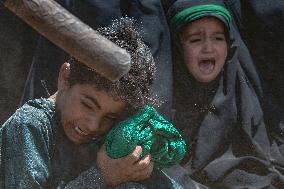
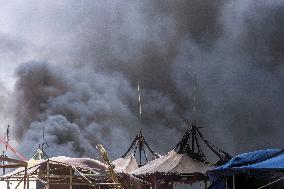
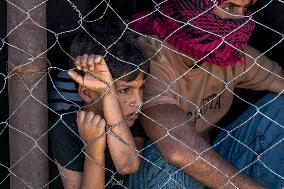
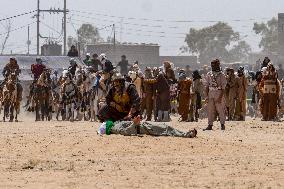
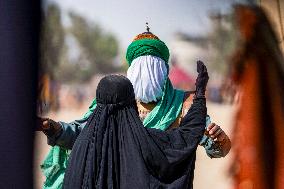
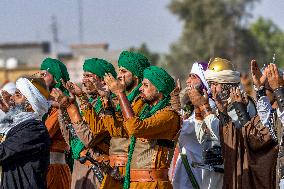
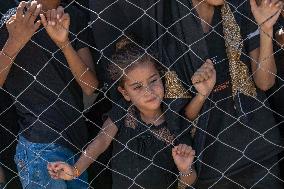
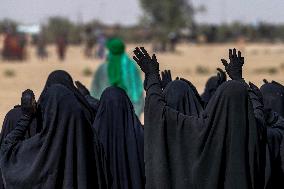
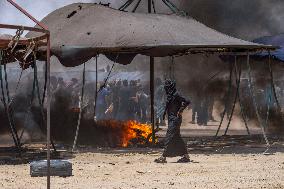
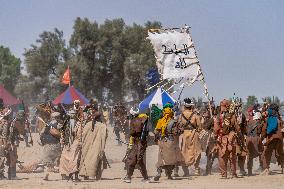
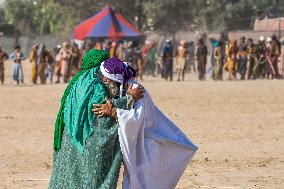
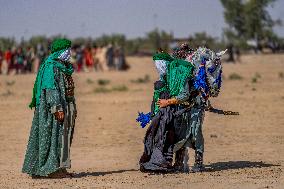
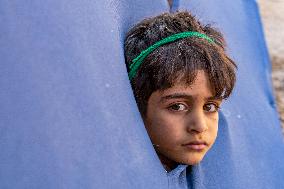
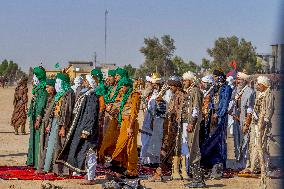
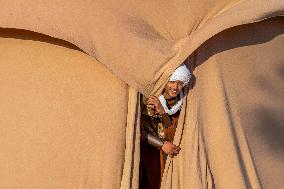
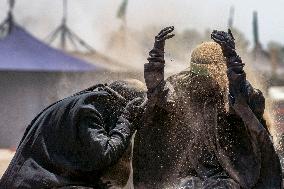
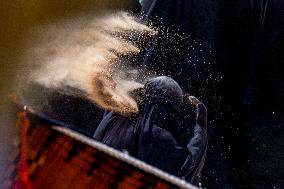
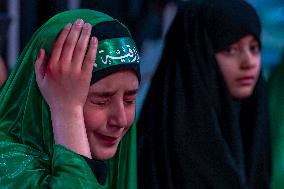
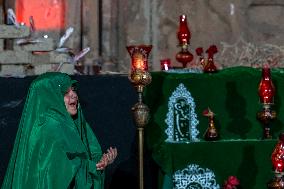
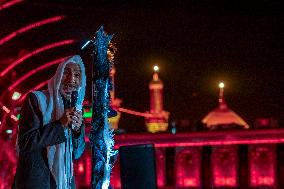
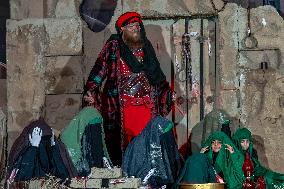
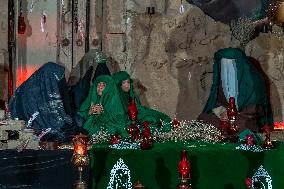
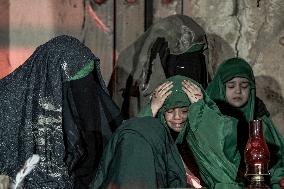
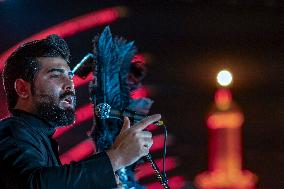
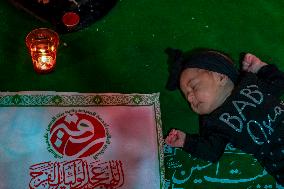
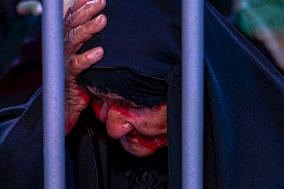
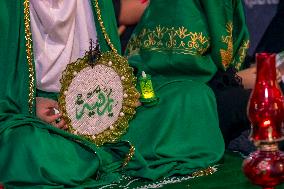
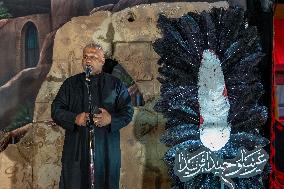
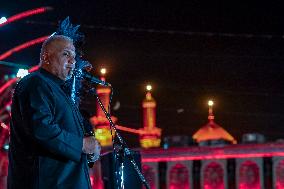
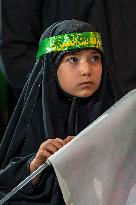
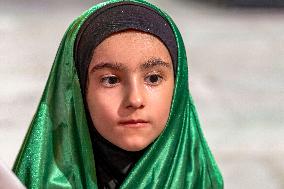
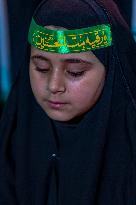
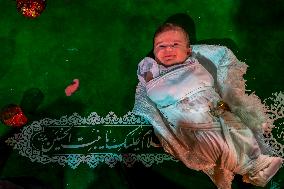
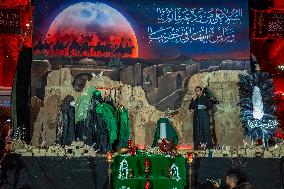
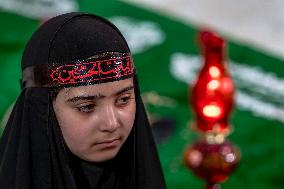
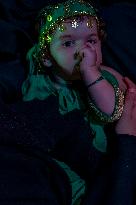
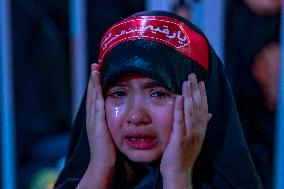
The representation of the incident of TAF by the people of the city of Al-Ghomas in Karbala on July 8, 2025. This theatrical reenactment, known as "Taf," commemorates the Battle of Karbala in 680 AD, where Imam Hussein, the grandson of the Prophet Muhammad, was martyred. Participants dress in traditional costumes and dramatize the events of Ashura to honor the sacrifice and stand for justice that Imam Hussein represents in Shia Islam. The annual performance attracts large crowds and serves as a powerful cultural and religious expression of devotion, grief, and historical memory. The city of Karbala becomes a focal point for mourning rituals during Muharram, reinforcing collective identity and spiritual connection for millions of Shia Muslims. Photo by Samer Al Husseini/Middle East Images/ABACAPRESS.COM

  •  
Karbala Rituals - Iraq

Karbala Rituals - Iraq

The representation of the incident of TAF by the people of the city of Al-Ghomas in Karbala on July 8, 2025. This theatrical reenactment, known as "Taf," commemorates the Battle of Karbala in 680 AD, where Imam Hussein, the grandson of the Prophet Muhammad, was martyred. Participants dress in traditional costumes and dramatize the events of Ashura to honor the sacrifice and stand for justice that Imam Hussein represents in Shia Islam. The annual performance attracts large crowds and serves as a powerful cultural and religious expression of devotion, grief, and historical memory. The city of Karbala becomes a focal point for mourning rituals during Muharram, reinforcing collective identity and spiritual connection for millions of Shia Muslims. Photo by Samer Al Husseini/Middle East Images/ABACAPRESS.COM

  •  
Karbala Rituals - Iraq

Karbala Rituals - Iraq

The representation of the incident of TAF by the people of the city of Al-Ghomas in Karbala on July 8, 2025. This theatrical reenactment, known as "Taf," commemorates the Battle of Karbala in 680 AD, where Imam Hussein, the grandson of the Prophet Muhammad, was martyred. Participants dress in traditional costumes and dramatize the events of Ashura to honor the sacrifice and stand for justice that Imam Hussein represents in Shia Islam. The annual performance attracts large crowds and serves as a powerful cultural and religious expression of devotion, grief, and historical memory. The city of Karbala becomes a focal point for mourning rituals during Muharram, reinforcing collective identity and spiritual connection for millions of Shia Muslims. Photo by Samer Al Husseini/Middle East Images/ABACAPRESS.COM

  •  
Karbala Rituals - Iraq

Karbala Rituals - Iraq

The representation of the incident of TAF by the people of the city of Al-Ghomas in Karbala on July 8, 2025. This theatrical reenactment, known as "Taf," commemorates the Battle of Karbala in 680 AD, where Imam Hussein, the grandson of the Prophet Muhammad, was martyred. Participants dress in traditional costumes and dramatize the events of Ashura to honor the sacrifice and stand for justice that Imam Hussein represents in Shia Islam. The annual performance attracts large crowds and serves as a powerful cultural and religious expression of devotion, grief, and historical memory. The city of Karbala becomes a focal point for mourning rituals during Muharram, reinforcing collective identity and spiritual connection for millions of Shia Muslims. Photo by Samer Al Husseini/Middle East Images/ABACAPRESS.COM

  •  
Karbala Rituals - Iraq

Karbala Rituals - Iraq

The representation of the incident of TAF by the people of the city of Al-Ghomas in Karbala on July 8, 2025. This theatrical reenactment, known as "Taf," commemorates the Battle of Karbala in 680 AD, where Imam Hussein, the grandson of the Prophet Muhammad, was martyred. Participants dress in traditional costumes and dramatize the events of Ashura to honor the sacrifice and stand for justice that Imam Hussein represents in Shia Islam. The annual performance attracts large crowds and serves as a powerful cultural and religious expression of devotion, grief, and historical memory. The city of Karbala becomes a focal point for mourning rituals during Muharram, reinforcing collective identity and spiritual connection for millions of Shia Muslims. Photo by Samer Al Husseini/Middle East Images/ABACAPRESS.COM

  •  
Karbala Rituals - Iraq

Karbala Rituals - Iraq

The representation of the incident of TAF by the people of the city of Al-Ghomas in Karbala on July 8, 2025. This theatrical reenactment, known as "Taf," commemorates the Battle of Karbala in 680 AD, where Imam Hussein, the grandson of the Prophet Muhammad, was martyred. Participants dress in traditional costumes and dramatize the events of Ashura to honor the sacrifice and stand for justice that Imam Hussein represents in Shia Islam. The annual performance attracts large crowds and serves as a powerful cultural and religious expression of devotion, grief, and historical memory. The city of Karbala becomes a focal point for mourning rituals during Muharram, reinforcing collective identity and spiritual connection for millions of Shia Muslims. Photo by Samer Al Husseini/Middle East Images/ABACAPRESS.COM

  •  
Karbala Rituals - Iraq

Karbala Rituals - Iraq

The representation of the incident of TAF by the people of the city of Al-Ghomas in Karbala on July 8, 2025. This theatrical reenactment, known as "Taf," commemorates the Battle of Karbala in 680 AD, where Imam Hussein, the grandson of the Prophet Muhammad, was martyred. Participants dress in traditional costumes and dramatize the events of Ashura to honor the sacrifice and stand for justice that Imam Hussein represents in Shia Islam. The annual performance attracts large crowds and serves as a powerful cultural and religious expression of devotion, grief, and historical memory. The city of Karbala becomes a focal point for mourning rituals during Muharram, reinforcing collective identity and spiritual connection for millions of Shia Muslims. Photo by Samer Al Husseini/Middle East Images/ABACAPRESS.COM

  •  
Karbala Rituals - Iraq

Karbala Rituals - Iraq

The representation of the incident of TAF by the people of the city of Al-Ghomas in Karbala on July 8, 2025. This theatrical reenactment, known as "Taf," commemorates the Battle of Karbala in 680 AD, where Imam Hussein, the grandson of the Prophet Muhammad, was martyred. Participants dress in traditional costumes and dramatize the events of Ashura to honor the sacrifice and stand for justice that Imam Hussein represents in Shia Islam. The annual performance attracts large crowds and serves as a powerful cultural and religious expression of devotion, grief, and historical memory. The city of Karbala becomes a focal point for mourning rituals during Muharram, reinforcing collective identity and spiritual connection for millions of Shia Muslims. Photo by Samer Al Husseini/Middle East Images/ABACAPRESS.COM

  •  
Karbala Rituals - Iraq

Karbala Rituals - Iraq

The representation of the incident of TAF by the people of the city of Al-Ghomas in Karbala on July 8, 2025. This theatrical reenactment, known as "Taf," commemorates the Battle of Karbala in 680 AD, where Imam Hussein, the grandson of the Prophet Muhammad, was martyred. Participants dress in traditional costumes and dramatize the events of Ashura to honor the sacrifice and stand for justice that Imam Hussein represents in Shia Islam. The annual performance attracts large crowds and serves as a powerful cultural and religious expression of devotion, grief, and historical memory. The city of Karbala becomes a focal point for mourning rituals during Muharram, reinforcing collective identity and spiritual connection for millions of Shia Muslims. Photo by Samer Al Husseini/Middle East Images/ABACAPRESS.COM

  •  
Karbala Rituals - Iraq

Karbala Rituals - Iraq

The representation of the incident of TAF by the people of the city of Al-Ghomas in Karbala on July 8, 2025. This theatrical reenactment, known as "Taf," commemorates the Battle of Karbala in 680 AD, where Imam Hussein, the grandson of the Prophet Muhammad, was martyred. Participants dress in traditional costumes and dramatize the events of Ashura to honor the sacrifice and stand for justice that Imam Hussein represents in Shia Islam. The annual performance attracts large crowds and serves as a powerful cultural and religious expression of devotion, grief, and historical memory. The city of Karbala becomes a focal point for mourning rituals during Muharram, reinforcing collective identity and spiritual connection for millions of Shia Muslims. Photo by Samer Al Husseini/Middle East Images/ABACAPRESS.COM

  •  
Karbala Rituals - Iraq

Karbala Rituals - Iraq

The representation of the incident of TAF by the people of the city of Al-Ghomas in Karbala on July 8, 2025. This theatrical reenactment, known as "Taf," commemorates the Battle of Karbala in 680 AD, where Imam Hussein, the grandson of the Prophet Muhammad, was martyred. Participants dress in traditional costumes and dramatize the events of Ashura to honor the sacrifice and stand for justice that Imam Hussein represents in Shia Islam. The annual performance attracts large crowds and serves as a powerful cultural and religious expression of devotion, grief, and historical memory. The city of Karbala becomes a focal point for mourning rituals during Muharram, reinforcing collective identity and spiritual connection for millions of Shia Muslims. Photo by Samer Al Husseini/Middle East Images/ABACAPRESS.COM

  •  
Karbala Rituals - Iraq

Karbala Rituals - Iraq

The representation of the incident of TAF by the people of the city of Al-Ghomas in Karbala on July 8, 2025. This theatrical reenactment, known as "Taf," commemorates the Battle of Karbala in 680 AD, where Imam Hussein, the grandson of the Prophet Muhammad, was martyred. Participants dress in traditional costumes and dramatize the events of Ashura to honor the sacrifice and stand for justice that Imam Hussein represents in Shia Islam. The annual performance attracts large crowds and serves as a powerful cultural and religious expression of devotion, grief, and historical memory. The city of Karbala becomes a focal point for mourning rituals during Muharram, reinforcing collective identity and spiritual connection for millions of Shia Muslims. Photo by Samer Al Husseini/Middle East Images/ABACAPRESS.COM

  •  
Karbala Rituals - Iraq

Karbala Rituals - Iraq

The representation of the incident of TAF by the people of the city of Al-Ghomas in Karbala on July 8, 2025. This theatrical reenactment, known as "Taf," commemorates the Battle of Karbala in 680 AD, where Imam Hussein, the grandson of the Prophet Muhammad, was martyred. Participants dress in traditional costumes and dramatize the events of Ashura to honor the sacrifice and stand for justice that Imam Hussein represents in Shia Islam. The annual performance attracts large crowds and serves as a powerful cultural and religious expression of devotion, grief, and historical memory. The city of Karbala becomes a focal point for mourning rituals during Muharram, reinforcing collective identity and spiritual connection for millions of Shia Muslims. Photo by Samer Al Husseini/Middle East Images/ABACAPRESS.COM

  •  
Karbala Rituals - Iraq

Karbala Rituals - Iraq

The representation of the incident of TAF by the people of the city of Al-Ghomas in Karbala on July 8, 2025. This theatrical reenactment, known as "Taf," commemorates the Battle of Karbala in 680 AD, where Imam Hussein, the grandson of the Prophet Muhammad, was martyred. Participants dress in traditional costumes and dramatize the events of Ashura to honor the sacrifice and stand for justice that Imam Hussein represents in Shia Islam. The annual performance attracts large crowds and serves as a powerful cultural and religious expression of devotion, grief, and historical memory. The city of Karbala becomes a focal point for mourning rituals during Muharram, reinforcing collective identity and spiritual connection for millions of Shia Muslims. Photo by Samer Al Husseini/Middle East Images/ABACAPRESS.COM

  •  
Karbala Rituals - Iraq

Karbala Rituals - Iraq

The representation of the incident of TAF by the people of the city of Al-Ghomas in Karbala on July 8, 2025. This theatrical reenactment, known as "Taf," commemorates the Battle of Karbala in 680 AD, where Imam Hussein, the grandson of the Prophet Muhammad, was martyred. Participants dress in traditional costumes and dramatize the events of Ashura to honor the sacrifice and stand for justice that Imam Hussein represents in Shia Islam. The annual performance attracts large crowds and serves as a powerful cultural and religious expression of devotion, grief, and historical memory. The city of Karbala becomes a focal point for mourning rituals during Muharram, reinforcing collective identity and spiritual connection for millions of Shia Muslims. Photo by Samer Al Husseini/Middle East Images/ABACAPRESS.COM

  •  
Karbala Rituals - Iraq

Karbala Rituals - Iraq

The representation of the incident of TAF by the people of the city of Al-Ghomas in Karbala on July 8, 2025. This theatrical reenactment, known as "Taf," commemorates the Battle of Karbala in 680 AD, where Imam Hussein, the grandson of the Prophet Muhammad, was martyred. Participants dress in traditional costumes and dramatize the events of Ashura to honor the sacrifice and stand for justice that Imam Hussein represents in Shia Islam. The annual performance attracts large crowds and serves as a powerful cultural and religious expression of devotion, grief, and historical memory. The city of Karbala becomes a focal point for mourning rituals during Muharram, reinforcing collective identity and spiritual connection for millions of Shia Muslims. Photo by Samer Al Husseini/Middle East Images/ABACAPRESS.COM

  •  
Karbala Rituals - Iraq

Karbala Rituals - Iraq

The representation of the incident of TAF by the people of the city of Al-Ghomas in Karbala on July 8, 2025. This theatrical reenactment, known as "Taf," commemorates the Battle of Karbala in 680 AD, where Imam Hussein, the grandson of the Prophet Muhammad, was martyred. Participants dress in traditional costumes and dramatize the events of Ashura to honor the sacrifice and stand for justice that Imam Hussein represents in Shia Islam. The annual performance attracts large crowds and serves as a powerful cultural and religious expression of devotion, grief, and historical memory. The city of Karbala becomes a focal point for mourning rituals during Muharram, reinforcing collective identity and spiritual connection for millions of Shia Muslims. Photo by Samer Al Husseini/Middle East Images/ABACAPRESS.COM

  •  
Karbala Rituals - Iraq

Karbala Rituals - Iraq

The representation of the incident of TAF by the people of the city of Al-Ghomas in Karbala on July 8, 2025. This theatrical reenactment, known as "Taf," commemorates the Battle of Karbala in 680 AD, where Imam Hussein, the grandson of the Prophet Muhammad, was martyred. Participants dress in traditional costumes and dramatize the events of Ashura to honor the sacrifice and stand for justice that Imam Hussein represents in Shia Islam. The annual performance attracts large crowds and serves as a powerful cultural and religious expression of devotion, grief, and historical memory. The city of Karbala becomes a focal point for mourning rituals during Muharram, reinforcing collective identity and spiritual connection for millions of Shia Muslims. Photo by Samer Al Husseini/Middle East Images/ABACAPRESS.COM

  •  
Karbala Rituals - Iraq

Karbala Rituals - Iraq

The representation of the incident of TAF by the people of the city of Al-Ghomas in Karbala on July 8, 2025. This theatrical reenactment, known as "Taf," commemorates the Battle of Karbala in 680 AD, where Imam Hussein, the grandson of the Prophet Muhammad, was martyred. Participants dress in traditional costumes and dramatize the events of Ashura to honor the sacrifice and stand for justice that Imam Hussein represents in Shia Islam. The annual performance attracts large crowds and serves as a powerful cultural and religious expression of devotion, grief, and historical memory. The city of Karbala becomes a focal point for mourning rituals during Muharram, reinforcing collective identity and spiritual connection for millions of Shia Muslims. Photo by Samer Al Husseini/Middle East Images/ABACAPRESS.COM

  •  
Artisans Preserve Legacy of Truck Painting - Pakistan

Artisans Preserve Legacy of Truck Painting - Pakistan

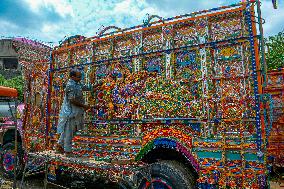
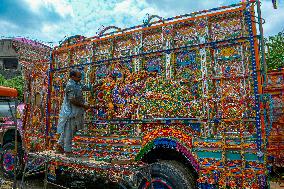
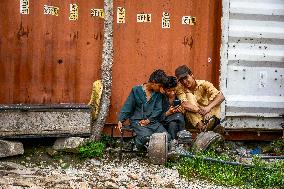
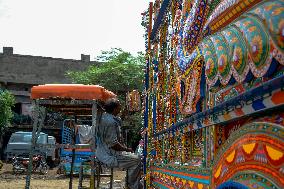
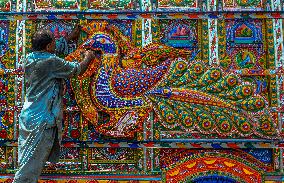
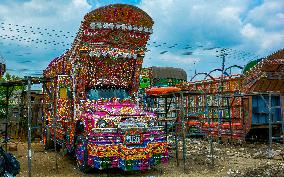
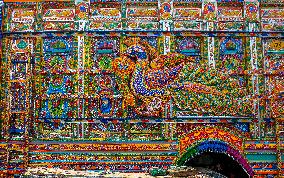
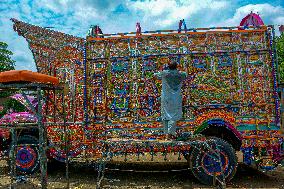
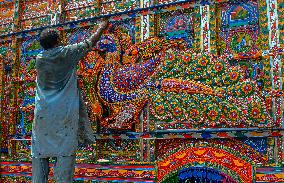
An artisan carefully paints a vibrant peacock motif on the side of a truck at a workshop in the Pirwadhai area of Rawalpindi, Pakistan, on July 31, 2025. Adorned with intricate designs, mirror work, and bold colors, truck art remains a powerful symbol of cultural identity and craftsmanship across Pakistan. This long-standing tradition, which began in the 1920s, transforms cargo vehicles into moving canvases that reflect poetry, politics, religious devotion, and personal pride. Each truck serves as a unique artistic expression by its owner and painter, often featuring animals, calligraphy, landscapes, and portraits of cultural icons. Photo by Raja Imran/Middle East Images/ABACAPRESS.COM

  •  
Artisans Preserve Legacy of Truck Painting - Pakistan

Artisans Preserve Legacy of Truck Painting - Pakistan

An artisan carefully paints a vibrant peacock motif on the side of a truck at a workshop in the Pirwadhai area of Rawalpindi, Pakistan, on July 31, 2025. Adorned with intricate designs, mirror work, and bold colors, truck art remains a powerful symbol of cultural identity and craftsmanship across Pakistan. This long-standing tradition, which began in the 1920s, transforms cargo vehicles into moving canvases that reflect poetry, politics, religious devotion, and personal pride. Each truck serves as a unique artistic expression by its owner and painter, often featuring animals, calligraphy, landscapes, and portraits of cultural icons. Photo by Raja Imran/Middle East Images/ABACAPRESS.COM

  •  
Artisans Preserve Legacy of Truck Painting - Pakistan

Artisans Preserve Legacy of Truck Painting - Pakistan

An artisan carefully paints a vibrant peacock motif on the side of a truck at a workshop in the Pirwadhai area of Rawalpindi, Pakistan, on July 31, 2025. Adorned with intricate designs, mirror work, and bold colors, truck art remains a powerful symbol of cultural identity and craftsmanship across Pakistan. This long-standing tradition, which began in the 1920s, transforms cargo vehicles into moving canvases that reflect poetry, politics, religious devotion, and personal pride. Each truck serves as a unique artistic expression by its owner and painter, often featuring animals, calligraphy, landscapes, and portraits of cultural icons. Photo by Raja Imran/Middle East Images/ABACAPRESS.COM

  •  
Artisans Preserve Legacy of Truck Painting - Pakistan

Artisans Preserve Legacy of Truck Painting - Pakistan

An artisan carefully paints a vibrant peacock motif on the side of a truck at a workshop in the Pirwadhai area of Rawalpindi, Pakistan, on July 31, 2025. Adorned with intricate designs, mirror work, and bold colors, truck art remains a powerful symbol of cultural identity and craftsmanship across Pakistan. This long-standing tradition, which began in the 1920s, transforms cargo vehicles into moving canvases that reflect poetry, politics, religious devotion, and personal pride. Each truck serves as a unique artistic expression by its owner and painter, often featuring animals, calligraphy, landscapes, and portraits of cultural icons. Photo by Raja Imran/Middle East Images/ABACAPRESS.COM

  •  
Artisans Preserve Legacy of Truck Painting - Pakistan

Artisans Preserve Legacy of Truck Painting - Pakistan

An artisan carefully paints a vibrant peacock motif on the side of a truck at a workshop in the Pirwadhai area of Rawalpindi, Pakistan, on July 31, 2025. Adorned with intricate designs, mirror work, and bold colors, truck art remains a powerful symbol of cultural identity and craftsmanship across Pakistan. This long-standing tradition, which began in the 1920s, transforms cargo vehicles into moving canvases that reflect poetry, politics, religious devotion, and personal pride. Each truck serves as a unique artistic expression by its owner and painter, often featuring animals, calligraphy, landscapes, and portraits of cultural icons. Photo by Raja Imran/Middle East Images/ABACAPRESS.COM

  •  
Artisans Preserve Legacy of Truck Painting - Pakistan

Artisans Preserve Legacy of Truck Painting - Pakistan

An artisan carefully paints a vibrant peacock motif on the side of a truck at a workshop in the Pirwadhai area of Rawalpindi, Pakistan, on July 31, 2025. Adorned with intricate designs, mirror work, and bold colors, truck art remains a powerful symbol of cultural identity and craftsmanship across Pakistan. This long-standing tradition, which began in the 1920s, transforms cargo vehicles into moving canvases that reflect poetry, politics, religious devotion, and personal pride. Each truck serves as a unique artistic expression by its owner and painter, often featuring animals, calligraphy, landscapes, and portraits of cultural icons. Photo by Raja Imran/Middle East Images/ABACAPRESS.COM

  •  
Artisans Preserve Legacy of Truck Painting - Pakistan

Artisans Preserve Legacy of Truck Painting - Pakistan

An artisan carefully paints a vibrant peacock motif on the side of a truck at a workshop in the Pirwadhai area of Rawalpindi, Pakistan, on July 31, 2025. Adorned with intricate designs, mirror work, and bold colors, truck art remains a powerful symbol of cultural identity and craftsmanship across Pakistan. This long-standing tradition, which began in the 1920s, transforms cargo vehicles into moving canvases that reflect poetry, politics, religious devotion, and personal pride. Each truck serves as a unique artistic expression by its owner and painter, often featuring animals, calligraphy, landscapes, and portraits of cultural icons. Photo by Raja Imran/Middle East Images/ABACAPRESS.COM

  •  
Artisans Preserve Legacy of Truck Painting - Pakistan

Artisans Preserve Legacy of Truck Painting - Pakistan

An artisan carefully paints a vibrant peacock motif on the side of a truck at a workshop in the Pirwadhai area of Rawalpindi, Pakistan, on July 31, 2025. Adorned with intricate designs, mirror work, and bold colors, truck art remains a powerful symbol of cultural identity and craftsmanship across Pakistan. This long-standing tradition, which began in the 1920s, transforms cargo vehicles into moving canvases that reflect poetry, politics, religious devotion, and personal pride. Each truck serves as a unique artistic expression by its owner and painter, often featuring animals, calligraphy, landscapes, and portraits of cultural icons. Photo by Raja Imran/Middle East Images/ABACAPRESS.COM

  •  
Artisans Preserve Legacy of Truck Painting - Pakistan

Artisans Preserve Legacy of Truck Painting - Pakistan

An artisan carefully paints a vibrant peacock motif on the side of a truck at a workshop in the Pirwadhai area of Rawalpindi, Pakistan, on July 31, 2025. Adorned with intricate designs, mirror work, and bold colors, truck art remains a powerful symbol of cultural identity and craftsmanship across Pakistan. This long-standing tradition, which began in the 1920s, transforms cargo vehicles into moving canvases that reflect poetry, politics, religious devotion, and personal pride. Each truck serves as a unique artistic expression by its owner and painter, often featuring animals, calligraphy, landscapes, and portraits of cultural icons. Photo by Raja Imran/Middle East Images/ABACAPRESS.COM

  •  
Pilgrims March for Lady Ruqayyah in Karbala

Pilgrims March for Lady Ruqayyah in Karbala

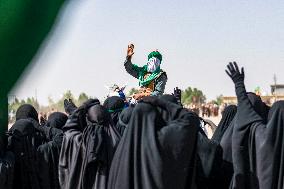
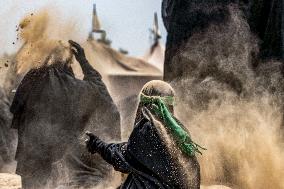
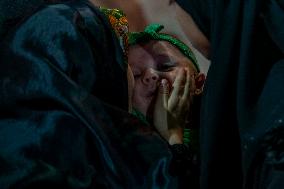
Devotees participate in a religious procession known as the "Lady Ruqayyah Journey" between the two holy shrines in Karbala, Iraq, on July 29, 2025. The annual commemoration honors Lady Ruqayyah, the young daughter of Imam Hussein, revered in Shia Islam for her suffering during and after the Battle of Karbala. Pilgrims walk solemnly between the Imam Hussein Shrine and the Al-Abbas Shrine, expressing mourning, devotion, and solidarity with the tragedy of Karbala. Many wear black and recite elegies, while some carry symbolic items representing grief and resilience. The event draws thousands of worshippers from across Iraq and neighboring countries, especially during the Islamic lunar months of Muharram and Safar. Karbala remains a central site of religious memory and spiritual expression, and this ritual procession reflects deep historical and cultural reverence passed down through generations. Photo by Samer Al Husseini/Middle East Images/ABACAPRESS.COM

  •  
Pilgrims March for Lady Ruqayyah in Karbala

Pilgrims March for Lady Ruqayyah in Karbala

Devotees participate in a religious procession known as the "Lady Ruqayyah Journey" between the two holy shrines in Karbala, Iraq, on July 29, 2025. The annual commemoration honors Lady Ruqayyah, the young daughter of Imam Hussein, revered in Shia Islam for her suffering during and after the Battle of Karbala. Pilgrims walk solemnly between the Imam Hussein Shrine and the Al-Abbas Shrine, expressing mourning, devotion, and solidarity with the tragedy of Karbala. Many wear black and recite elegies, while some carry symbolic items representing grief and resilience. The event draws thousands of worshippers from across Iraq and neighboring countries, especially during the Islamic lunar months of Muharram and Safar. Karbala remains a central site of religious memory and spiritual expression, and this ritual procession reflects deep historical and cultural reverence passed down through generations. Photo by Samer Al Husseini/Middle East Images/ABACAPRESS.COM

  •  
Pilgrims March for Lady Ruqayyah in Karbala

Pilgrims March for Lady Ruqayyah in Karbala

Devotees participate in a religious procession known as the "Lady Ruqayyah Journey" between the two holy shrines in Karbala, Iraq, on July 29, 2025. The annual commemoration honors Lady Ruqayyah, the young daughter of Imam Hussein, revered in Shia Islam for her suffering during and after the Battle of Karbala. Pilgrims walk solemnly between the Imam Hussein Shrine and the Al-Abbas Shrine, expressing mourning, devotion, and solidarity with the tragedy of Karbala. Many wear black and recite elegies, while some carry symbolic items representing grief and resilience. The event draws thousands of worshippers from across Iraq and neighboring countries, especially during the Islamic lunar months of Muharram and Safar. Karbala remains a central site of religious memory and spiritual expression, and this ritual procession reflects deep historical and cultural reverence passed down through generations. Photo by Samer Al Husseini/Middle East Images/ABACAPRESS.COM

  •  
Pilgrims March for Lady Ruqayyah in Karbala

Pilgrims March for Lady Ruqayyah in Karbala

Devotees participate in a religious procession known as the "Lady Ruqayyah Journey" between the two holy shrines in Karbala, Iraq, on July 29, 2025. The annual commemoration honors Lady Ruqayyah, the young daughter of Imam Hussein, revered in Shia Islam for her suffering during and after the Battle of Karbala. Pilgrims walk solemnly between the Imam Hussein Shrine and the Al-Abbas Shrine, expressing mourning, devotion, and solidarity with the tragedy of Karbala. Many wear black and recite elegies, while some carry symbolic items representing grief and resilience. The event draws thousands of worshippers from across Iraq and neighboring countries, especially during the Islamic lunar months of Muharram and Safar. Karbala remains a central site of religious memory and spiritual expression, and this ritual procession reflects deep historical and cultural reverence passed down through generations. Photo by Samer Al Husseini/Middle East Images/ABACAPRESS.COM

  •  
Pilgrims March for Lady Ruqayyah in Karbala

Pilgrims March for Lady Ruqayyah in Karbala

Devotees participate in a religious procession known as the "Lady Ruqayyah Journey" between the two holy shrines in Karbala, Iraq, on July 29, 2025. The annual commemoration honors Lady Ruqayyah, the young daughter of Imam Hussein, revered in Shia Islam for her suffering during and after the Battle of Karbala. Pilgrims walk solemnly between the Imam Hussein Shrine and the Al-Abbas Shrine, expressing mourning, devotion, and solidarity with the tragedy of Karbala. Many wear black and recite elegies, while some carry symbolic items representing grief and resilience. The event draws thousands of worshippers from across Iraq and neighboring countries, especially during the Islamic lunar months of Muharram and Safar. Karbala remains a central site of religious memory and spiritual expression, and this ritual procession reflects deep historical and cultural reverence passed down through generations. Photo by Samer Al Husseini/Middle East Images/ABACAPRESS.COM

  •  
Pilgrims March for Lady Ruqayyah in Karbala

Pilgrims March for Lady Ruqayyah in Karbala

Devotees participate in a religious procession known as the "Lady Ruqayyah Journey" between the two holy shrines in Karbala, Iraq, on July 29, 2025. The annual commemoration honors Lady Ruqayyah, the young daughter of Imam Hussein, revered in Shia Islam for her suffering during and after the Battle of Karbala. Pilgrims walk solemnly between the Imam Hussein Shrine and the Al-Abbas Shrine, expressing mourning, devotion, and solidarity with the tragedy of Karbala. Many wear black and recite elegies, while some carry symbolic items representing grief and resilience. The event draws thousands of worshippers from across Iraq and neighboring countries, especially during the Islamic lunar months of Muharram and Safar. Karbala remains a central site of religious memory and spiritual expression, and this ritual procession reflects deep historical and cultural reverence passed down through generations. Photo by Samer Al Husseini/Middle East Images/ABACAPRESS.COM

  •  
Pilgrims March for Lady Ruqayyah in Karbala

Pilgrims March for Lady Ruqayyah in Karbala

Devotees participate in a religious procession known as the "Lady Ruqayyah Journey" between the two holy shrines in Karbala, Iraq, on July 29, 2025. The annual commemoration honors Lady Ruqayyah, the young daughter of Imam Hussein, revered in Shia Islam for her suffering during and after the Battle of Karbala. Pilgrims walk solemnly between the Imam Hussein Shrine and the Al-Abbas Shrine, expressing mourning, devotion, and solidarity with the tragedy of Karbala. Many wear black and recite elegies, while some carry symbolic items representing grief and resilience. The event draws thousands of worshippers from across Iraq and neighboring countries, especially during the Islamic lunar months of Muharram and Safar. Karbala remains a central site of religious memory and spiritual expression, and this ritual procession reflects deep historical and cultural reverence passed down through generations. Photo by Samer Al Husseini/Middle East Images/ABACAPRESS.COM

  •  
Pilgrims March for Lady Ruqayyah in Karbala

Pilgrims March for Lady Ruqayyah in Karbala

Devotees participate in a religious procession known as the "Lady Ruqayyah Journey" between the two holy shrines in Karbala, Iraq, on July 29, 2025. The annual commemoration honors Lady Ruqayyah, the young daughter of Imam Hussein, revered in Shia Islam for her suffering during and after the Battle of Karbala. Pilgrims walk solemnly between the Imam Hussein Shrine and the Al-Abbas Shrine, expressing mourning, devotion, and solidarity with the tragedy of Karbala. Many wear black and recite elegies, while some carry symbolic items representing grief and resilience. The event draws thousands of worshippers from across Iraq and neighboring countries, especially during the Islamic lunar months of Muharram and Safar. Karbala remains a central site of religious memory and spiritual expression, and this ritual procession reflects deep historical and cultural reverence passed down through generations. Photo by Samer Al Husseini/Middle East Images/ABACAPRESS.COM

  •  
Pilgrims March for Lady Ruqayyah in Karbala

Pilgrims March for Lady Ruqayyah in Karbala

Devotees participate in a religious procession known as the "Lady Ruqayyah Journey" between the two holy shrines in Karbala, Iraq, on July 29, 2025. The annual commemoration honors Lady Ruqayyah, the young daughter of Imam Hussein, revered in Shia Islam for her suffering during and after the Battle of Karbala. Pilgrims walk solemnly between the Imam Hussein Shrine and the Al-Abbas Shrine, expressing mourning, devotion, and solidarity with the tragedy of Karbala. Many wear black and recite elegies, while some carry symbolic items representing grief and resilience. The event draws thousands of worshippers from across Iraq and neighboring countries, especially during the Islamic lunar months of Muharram and Safar. Karbala remains a central site of religious memory and spiritual expression, and this ritual procession reflects deep historical and cultural reverence passed down through generations. Photo by Samer Al Husseini/Middle East Images/ABACAPRESS.COM

  •  
Pilgrims March for Lady Ruqayyah in Karbala

Pilgrims March for Lady Ruqayyah in Karbala

Devotees participate in a religious procession known as the "Lady Ruqayyah Journey" between the two holy shrines in Karbala, Iraq, on July 29, 2025. The annual commemoration honors Lady Ruqayyah, the young daughter of Imam Hussein, revered in Shia Islam for her suffering during and after the Battle of Karbala. Pilgrims walk solemnly between the Imam Hussein Shrine and the Al-Abbas Shrine, expressing mourning, devotion, and solidarity with the tragedy of Karbala. Many wear black and recite elegies, while some carry symbolic items representing grief and resilience. The event draws thousands of worshippers from across Iraq and neighboring countries, especially during the Islamic lunar months of Muharram and Safar. Karbala remains a central site of religious memory and spiritual expression, and this ritual procession reflects deep historical and cultural reverence passed down through generations. Photo by Samer Al Husseini/Middle East Images/ABACAPRESS.COM

  •  
Pilgrims March for Lady Ruqayyah in Karbala

Pilgrims March for Lady Ruqayyah in Karbala

Devotees participate in a religious procession known as the "Lady Ruqayyah Journey" between the two holy shrines in Karbala, Iraq, on July 29, 2025. The annual commemoration honors Lady Ruqayyah, the young daughter of Imam Hussein, revered in Shia Islam for her suffering during and after the Battle of Karbala. Pilgrims walk solemnly between the Imam Hussein Shrine and the Al-Abbas Shrine, expressing mourning, devotion, and solidarity with the tragedy of Karbala. Many wear black and recite elegies, while some carry symbolic items representing grief and resilience. The event draws thousands of worshippers from across Iraq and neighboring countries, especially during the Islamic lunar months of Muharram and Safar. Karbala remains a central site of religious memory and spiritual expression, and this ritual procession reflects deep historical and cultural reverence passed down through generations. Photo by Samer Al Husseini/Middle East Images/ABACAPRESS.COM

  •  
Pilgrims March for Lady Ruqayyah in Karbala

Pilgrims March for Lady Ruqayyah in Karbala

Devotees participate in a religious procession known as the "Lady Ruqayyah Journey" between the two holy shrines in Karbala, Iraq, on July 29, 2025. The annual commemoration honors Lady Ruqayyah, the young daughter of Imam Hussein, revered in Shia Islam for her suffering during and after the Battle of Karbala. Pilgrims walk solemnly between the Imam Hussein Shrine and the Al-Abbas Shrine, expressing mourning, devotion, and solidarity with the tragedy of Karbala. Many wear black and recite elegies, while some carry symbolic items representing grief and resilience. The event draws thousands of worshippers from across Iraq and neighboring countries, especially during the Islamic lunar months of Muharram and Safar. Karbala remains a central site of religious memory and spiritual expression, and this ritual procession reflects deep historical and cultural reverence passed down through generations. Photo by Samer Al Husseini/Middle East Images/ABACAPRESS.COM

  •  
Pilgrims March for Lady Ruqayyah in Karbala

Pilgrims March for Lady Ruqayyah in Karbala

Devotees participate in a religious procession known as the "Lady Ruqayyah Journey" between the two holy shrines in Karbala, Iraq, on July 29, 2025. The annual commemoration honors Lady Ruqayyah, the young daughter of Imam Hussein, revered in Shia Islam for her suffering during and after the Battle of Karbala. Pilgrims walk solemnly between the Imam Hussein Shrine and the Al-Abbas Shrine, expressing mourning, devotion, and solidarity with the tragedy of Karbala. Many wear black and recite elegies, while some carry symbolic items representing grief and resilience. The event draws thousands of worshippers from across Iraq and neighboring countries, especially during the Islamic lunar months of Muharram and Safar. Karbala remains a central site of religious memory and spiritual expression, and this ritual procession reflects deep historical and cultural reverence passed down through generations. Photo by Samer Al Husseini/Middle East Images/ABACAPRESS.COM

  •  
Pilgrims March for Lady Ruqayyah in Karbala

Pilgrims March for Lady Ruqayyah in Karbala

Devotees participate in a religious procession known as the "Lady Ruqayyah Journey" between the two holy shrines in Karbala, Iraq, on July 29, 2025. The annual commemoration honors Lady Ruqayyah, the young daughter of Imam Hussein, revered in Shia Islam for her suffering during and after the Battle of Karbala. Pilgrims walk solemnly between the Imam Hussein Shrine and the Al-Abbas Shrine, expressing mourning, devotion, and solidarity with the tragedy of Karbala. Many wear black and recite elegies, while some carry symbolic items representing grief and resilience. The event draws thousands of worshippers from across Iraq and neighboring countries, especially during the Islamic lunar months of Muharram and Safar. Karbala remains a central site of religious memory and spiritual expression, and this ritual procession reflects deep historical and cultural reverence passed down through generations. Photo by Samer Al Husseini/Middle East Images/ABACAPRESS.COM

  •  
Pilgrims March for Lady Ruqayyah in Karbala

Pilgrims March for Lady Ruqayyah in Karbala

Devotees participate in a religious procession known as the "Lady Ruqayyah Journey" between the two holy shrines in Karbala, Iraq, on July 29, 2025. The annual commemoration honors Lady Ruqayyah, the young daughter of Imam Hussein, revered in Shia Islam for her suffering during and after the Battle of Karbala. Pilgrims walk solemnly between the Imam Hussein Shrine and the Al-Abbas Shrine, expressing mourning, devotion, and solidarity with the tragedy of Karbala. Many wear black and recite elegies, while some carry symbolic items representing grief and resilience. The event draws thousands of worshippers from across Iraq and neighboring countries, especially during the Islamic lunar months of Muharram and Safar. Karbala remains a central site of religious memory and spiritual expression, and this ritual procession reflects deep historical and cultural reverence passed down through generations. Photo by Samer Al Husseini/Middle East Images/ABACAPRESS.COM

  •  
Pilgrims March for Lady Ruqayyah in Karbala

Pilgrims March for Lady Ruqayyah in Karbala

Devotees participate in a religious procession known as the "Lady Ruqayyah Journey" between the two holy shrines in Karbala, Iraq, on July 29, 2025. The annual commemoration honors Lady Ruqayyah, the young daughter of Imam Hussein, revered in Shia Islam for her suffering during and after the Battle of Karbala. Pilgrims walk solemnly between the Imam Hussein Shrine and the Al-Abbas Shrine, expressing mourning, devotion, and solidarity with the tragedy of Karbala. Many wear black and recite elegies, while some carry symbolic items representing grief and resilience. The event draws thousands of worshippers from across Iraq and neighboring countries, especially during the Islamic lunar months of Muharram and Safar. Karbala remains a central site of religious memory and spiritual expression, and this ritual procession reflects deep historical and cultural reverence passed down through generations. Photo by Samer Al Husseini/Middle East Images/ABACAPRESS.COM

  •  
Pilgrims March for Lady Ruqayyah in Karbala

Pilgrims March for Lady Ruqayyah in Karbala

Devotees participate in a religious procession known as the "Lady Ruqayyah Journey" between the two holy shrines in Karbala, Iraq, on July 29, 2025. The annual commemoration honors Lady Ruqayyah, the young daughter of Imam Hussein, revered in Shia Islam for her suffering during and after the Battle of Karbala. Pilgrims walk solemnly between the Imam Hussein Shrine and the Al-Abbas Shrine, expressing mourning, devotion, and solidarity with the tragedy of Karbala. Many wear black and recite elegies, while some carry symbolic items representing grief and resilience. The event draws thousands of worshippers from across Iraq and neighboring countries, especially during the Islamic lunar months of Muharram and Safar. Karbala remains a central site of religious memory and spiritual expression, and this ritual procession reflects deep historical and cultural reverence passed down through generations. Photo by Samer Al Husseini/Middle East Images/ABACAPRESS.COM

  •  
Pilgrims March for Lady Ruqayyah in Karbala

Pilgrims March for Lady Ruqayyah in Karbala

Devotees participate in a religious procession known as the "Lady Ruqayyah Journey" between the two holy shrines in Karbala, Iraq, on July 29, 2025. The annual commemoration honors Lady Ruqayyah, the young daughter of Imam Hussein, revered in Shia Islam for her suffering during and after the Battle of Karbala. Pilgrims walk solemnly between the Imam Hussein Shrine and the Al-Abbas Shrine, expressing mourning, devotion, and solidarity with the tragedy of Karbala. Many wear black and recite elegies, while some carry symbolic items representing grief and resilience. The event draws thousands of worshippers from across Iraq and neighboring countries, especially during the Islamic lunar months of Muharram and Safar. Karbala remains a central site of religious memory and spiritual expression, and this ritual procession reflects deep historical and cultural reverence passed down through generations. Photo by Samer Al Husseini/Middle East Images/ABACAPRESS.COM

  •  
Pilgrims March for Lady Ruqayyah in Karbala

Pilgrims March for Lady Ruqayyah in Karbala

Devotees participate in a religious procession known as the "Lady Ruqayyah Journey" between the two holy shrines in Karbala, Iraq, on July 29, 2025. The annual commemoration honors Lady Ruqayyah, the young daughter of Imam Hussein, revered in Shia Islam for her suffering during and after the Battle of Karbala. Pilgrims walk solemnly between the Imam Hussein Shrine and the Al-Abbas Shrine, expressing mourning, devotion, and solidarity with the tragedy of Karbala. Many wear black and recite elegies, while some carry symbolic items representing grief and resilience. The event draws thousands of worshippers from across Iraq and neighboring countries, especially during the Islamic lunar months of Muharram and Safar. Karbala remains a central site of religious memory and spiritual expression, and this ritual procession reflects deep historical and cultural reverence passed down through generations. Photo by Samer Al Husseini/Middle East Images/ABACAPRESS.COM

  •  
Pilgrims March for Lady Ruqayyah in Karbala

Pilgrims March for Lady Ruqayyah in Karbala

Devotees participate in a religious procession known as the "Lady Ruqayyah Journey" between the two holy shrines in Karbala, Iraq, on July 29, 2025. The annual commemoration honors Lady Ruqayyah, the young daughter of Imam Hussein, revered in Shia Islam for her suffering during and after the Battle of Karbala. Pilgrims walk solemnly between the Imam Hussein Shrine and the Al-Abbas Shrine, expressing mourning, devotion, and solidarity with the tragedy of Karbala. Many wear black and recite elegies, while some carry symbolic items representing grief and resilience. The event draws thousands of worshippers from across Iraq and neighboring countries, especially during the Islamic lunar months of Muharram and Safar. Karbala remains a central site of religious memory and spiritual expression, and this ritual procession reflects deep historical and cultural reverence passed down through generations. Photo by Samer Al Husseini/Middle East Images/ABACAPRESS.COM

  •  
Pilgrims March for Lady Ruqayyah in Karbala

Pilgrims March for Lady Ruqayyah in Karbala

Devotees participate in a religious procession known as the "Lady Ruqayyah Journey" between the two holy shrines in Karbala, Iraq, on July 29, 2025. The annual commemoration honors Lady Ruqayyah, the young daughter of Imam Hussein, revered in Shia Islam for her suffering during and after the Battle of Karbala. Pilgrims walk solemnly between the Imam Hussein Shrine and the Al-Abbas Shrine, expressing mourning, devotion, and solidarity with the tragedy of Karbala. Many wear black and recite elegies, while some carry symbolic items representing grief and resilience. The event draws thousands of worshippers from across Iraq and neighboring countries, especially during the Islamic lunar months of Muharram and Safar. Karbala remains a central site of religious memory and spiritual expression, and this ritual procession reflects deep historical and cultural reverence passed down through generations. Photo by Samer Al Husseini/Middle East Images/ABACAPRESS.COM

  •  
Pilgrims March for Lady Ruqayyah in Karbala

Pilgrims March for Lady Ruqayyah in Karbala

Devotees participate in a religious procession known as the "Lady Ruqayyah Journey" between the two holy shrines in Karbala, Iraq, on July 29, 2025. The annual commemoration honors Lady Ruqayyah, the young daughter of Imam Hussein, revered in Shia Islam for her suffering during and after the Battle of Karbala. Pilgrims walk solemnly between the Imam Hussein Shrine and the Al-Abbas Shrine, expressing mourning, devotion, and solidarity with the tragedy of Karbala. Many wear black and recite elegies, while some carry symbolic items representing grief and resilience. The event draws thousands of worshippers from across Iraq and neighboring countries, especially during the Islamic lunar months of Muharram and Safar. Karbala remains a central site of religious memory and spiritual expression, and this ritual procession reflects deep historical and cultural reverence passed down through generations. Photo by Samer Al Husseini/Middle East Images/ABACAPRESS.COM

  • Main
  • Top
  • Editorial
  • Creative
  • About Us
  • About ILG
  • Terms of use
  • Company
  • BEHIND
  • Price List
  • Single Plan
  • Monthly Plan
  • Services
  • Shooting
  • Rights Clearance
  • Support
  • FAQ
  • How To Buy
  • Contact Us
  • Become a Partner

© KYODO NEWS IMAGES INC

All Rights Reserved.

  • Editorial
  • Olympics
  • News
  • Sports
  • Japan
  • Tech
  • Royal
  • Disaster
  • NorthKorea
  • Old Japan
  • SNS
  • Creative
  • Food
  • Japan
  • Landscape
  • Animal
  • Popular
  • #Ukraine
  • #Russia
  • #coronavirus
  • #N. Korea
  • #China
  • #Thailand
  • #Ukraine
  • #Russia
  • #coronavirus
  • #N. Korea
  • #China
  • #Thailand
  • Food
  • Japan
  • Landscape
  • Animal
  • Olympics
  • News
  • Sports
  • Japan
  • Tech
  • Royal
  • Disaster
  • NorthKorea
  • Old Japan
  • SNS